
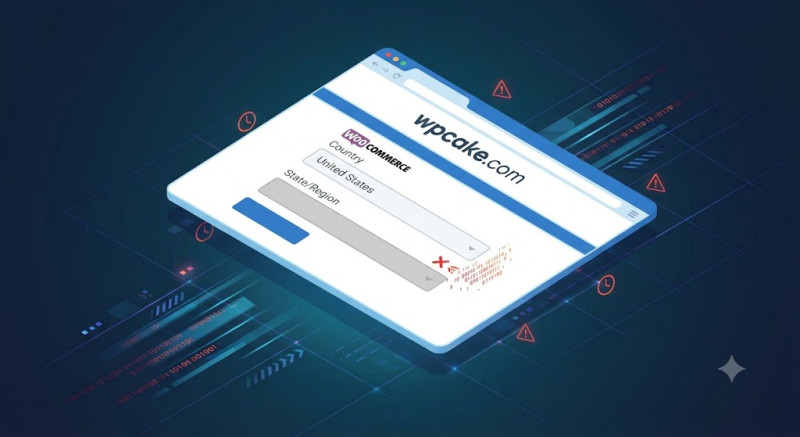
When a customer inputs their shipping details during checkout, selecting a country like the United States, Canada, or Australia should instantly turn the text input box for "State/Region" into a structured dropdown menu listing all valid local states. A common validation bug completely breaks this script layer, leaving the field as an immutable, empty box or failing to display any state inputs at all.
When the customer tries to finalize the transaction, the page scrolls up to display a rigid error message: "Shipping State is a required field." Since the dropdown input is visually missing or frozen, the user cannot input any text, making it completely impossible to bypass the checkout validator. This bug is typically triggered by an outdated locale localization asset file or a theme asset optimization pipeline that strips out core WooCommerce localized script variables (wc-country-select-spec) to optimize file payload metrics.
The Solution
Restoring region validation scripts requires forcing script initialization dependencies and flushing localized template caches.
-
Audit Script Optimization Exclusions: If you utilize plugins like Autoptimize or SiteGround Optimizer, check your JavaScript asset settings. You must explicitly exclude these core WooCommerce script components from deferral routines:
Plaintextwoocommerce.min.js country-select.min.js -
Force Script Re-Initialization: If your custom theme loads checkout forms via popups or modern dynamic AJAX tabs, the default window listener fails to bind to the select elements. Add this global jQuery patch script into your site theme footer file to force continuous element bindings:
jQuery(document).on('ready dynamic_checkout_loaded', function() {
    jQuery('body').trigger('update_checkout');
    if (typeof jQuery.fn.countrySelect !== 'undefined') {
        jQuery('.country_to_state').countrySelect();
    }
});
-
Update Core Locale Configurations: Go to WooCommerce > Status > Tools and clear the system WooCommerce transients data blocks to force the storefront to download freshly structured locale data arrays from the WordPress repository servers.