
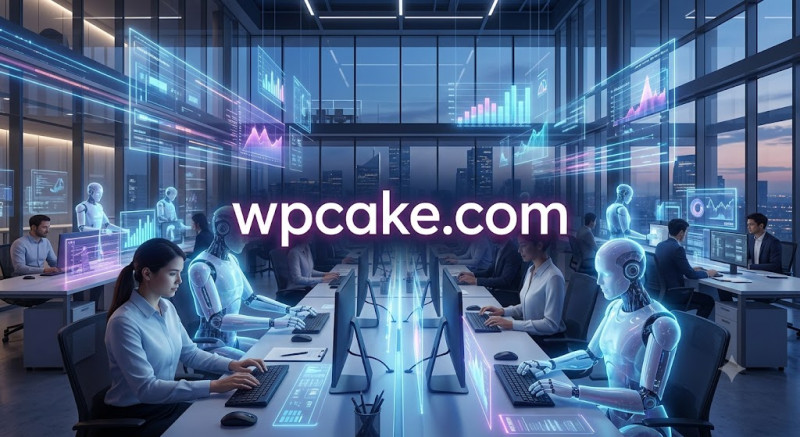
The landscape of enterprise productivity has undergone a seismic shift in May 2026, driven by the deployment of Next-Generation Autonomous AI Agents. Unlike the static LLM chatbots of previous years, which relied strictly on sequential user prompts, these 2026 agents possess advanced contextual memory, multi-modal reasoning, and cross-platform execution capabilities. Companies are no longer just using AI as a writing assistant; they are integrating AI "co-workers" directly into their operational ecosystems.
These new autonomous agents are capable of observing workflows across multiple software applications, learning corporate protocols, and executing complex, multi-step projects independently. For instance, an AI agent in a marketing department can analyze real-time market data, identify a sudden shift in consumer interest, draft a comprehensive campaign strategy, create visual assets using integrated diffusion models, and schedule the rollout across various social media platforms—all while optimizing the budget based on predictive analytics. Human intervention is reserved primarily for final approval and high-level strategic alignment.
A critical breakthrough enabling this autonomy is the implementation of "Liquid Neural Networks" combined with edge-computing architecture. This allows agents to adapt to new data inputs continuously without requiring expensive retraining cycles. They learn "on the job," adapting to a specific company's culture, tone of voice, and compliance guidelines within days. Furthermore, advanced cryptographic verification methods ensure that these agents operate securely within corporate firewalls, eliminating previous concerns regarding data leaks and intellectual property infringement.
As organizations adapt to this shift, the very definition of human labor is being redefined. Workers are transitioning from task executors to systems overseers. The focus has shifted from "how to do the work" to "how to direct the AI to do the work optimally." While this has raised valid questions about displacement in entry-level analytical roles, early data from May 2026 suggests that it is simultaneously creating a massive demand for AI orchestrators, prompt architects, and ethical compliance officers, leading to a more strategic and less repetitive daily workflow for the global workforce.