
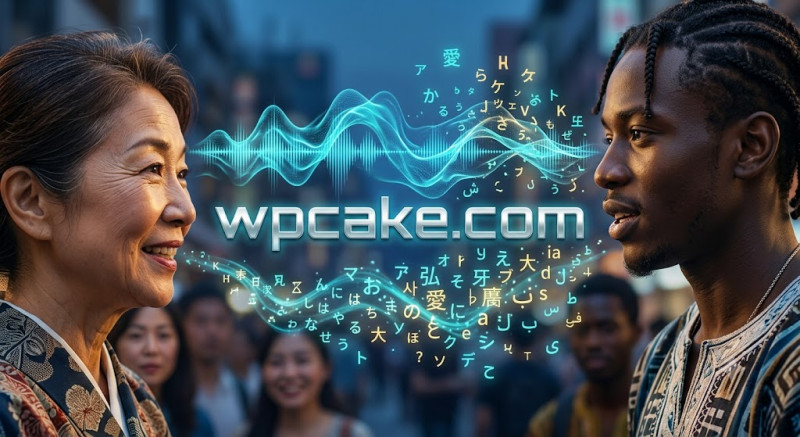
The dream of breaking down global language barriers has taken a massive leap forward this month with the release of hyper-integrated, omni-modal AI communication suites. For years, automated translation was a clunky, multi-step process: audio was transcribed into text, translated by a language model, and then pushed through a synthetic text-to-speech engine. This latency-heavy framework stripped human communication of its core elements—namely, emotion, timing, cultural nuance, and vocal inflection. In May 2026, new native multi-modal architectures process auditory, visual, and textual inputs simultaneously, delivering latency-free conversational translation that preserves the original speaker’s distinct voice print and emotional undertones.
These advanced systems work by mapping voice modulation, regional accents, physiological indicators of stress or excitement, and even facial expressions captured via smart eyewear. When an engineer in Tokyo speaks Japanese to a colleague in Berlin, the German receiver hears the message instantly in German, but delivered with the precise vocal timbre, rhythm, and conversational weight of the Japanese speaker. The AI does not merely translate words verbatim; it instantly reformulates idioms, technical metaphors, and cultural references to ensure the conceptual meaning remains perfectly intact. This level of synchronization is revolutionizing international business diplomacy, cross-border telemedicine, and global academic collaborations.
Furthermore, the integration of these models into augmented reality (AR) lenses has given rise to contextual visual translation. As users walk through foreign cities, the system seamlessly overwrites signs, menus, legal contracts, and handwritten notes in their native language within their field of view, maintaining the original typography, color, and texture of the physical material. The implications for the global workforce are staggering. Teams scattered across five continents are now operating as if they share the same physical office and language background. By removing the psychological friction of language comprehension, May 2026 is witnessing the birth of a genuinely unified global digital economy where talent and ideas flow unhindered by geographical or linguistic constraints.