
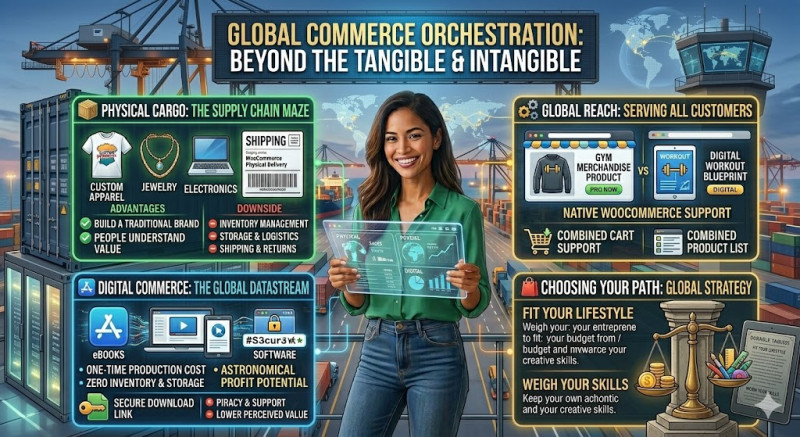
One of the greatest competitive advantages of the WooCommerce platform is its incredible versatility. Unlike platform specialized exclusively in one niche, WooCommerce can seamlessly handle any product type you throw at it. If you are preparing to launch your online venture, you will likely find yourself choosing between two primary business models: selling physical items or selling digital goods. Both paths offer incredible profit potential, but they require entirely different operational workflows, mindsets, and management strategies.
Physical products encompass everything tangible, from custom apparel and handmade jewelry to electronics and home decor. The main appeal of physical products is consumer familiarity; people understand the inherent value of an item they can hold in their hands. It allows you to build a traditional, recognizable brand with unique packaging and physical presence. However, physical items come with substantial logistical hurdles. You must manage inventory levels, find storage space, handle fragile items, deal with shipping companies, and manage complex return policies for damaged goods.
Digital products, on the other hand, include items like eBooks, online courses, software licenses, stock photography, and downloadable audio files. The financial advantages of digital goods are astronomical. Because you only need to create the file once, your manufacturing costs drop to zero after production. There are no physical inventory limits, no warehouse storage fees, and absolutely no shipping logistics. When a customer purchases a digital product, WooCommerce automatically emails them a secure download link, facilitating a 100% automated, passive transaction.
The downside to digital goods is the threat of online piracy and a lower perceived monetary value from consumers, which often requires you to work harder on your marketing to justify your pricing. Furthermore, you will need to provide technical support for users who struggle to download or open your files.
Fortunately, WooCommerce does not force you to pick just one side. Its native core configuration allows you to sell both types of products simultaneously on the exact same storefront. For instance, a fitness influencer can use WooCommerce to sell physical gym merchandise alongside digital workout blueprints and video courses. Weigh your current budget, storage capabilities, and creative skills to decide which model fits your lifestyle, and let WooCommerce handle the technical heavy lifting.